

Property Managers: 6 Fair Housing Checks to Stop Listing Copy Mistakes
Property Managers: 6 Fair Housing Checks to Stop Listing Copy Mistakes

Every property manager needs written screening criteria and a review of active listings for banned phrasing today, not next quarter. A working fair housing compliance checklist covers six areas: advertising language, tenant screening, reasonable accommodations, documentation, staff training, and periodic audits. HUD and the DOJ are the two agencies that enforce these rules, and a tool like Agentwrite can flag risky listing phrasing before it goes live, though it’s no substitute for legal counsel or a documented screening system.
TL;DR:
- Ensure all listing language is neutral and focused on property features, avoiding references to race, religion, or other protected classes to prevent steering claims.
- Apply the same fixed screening criteria uniformly to all applicants, and conduct individualized reviews for criminal history to avoid disparate-impact accusations.
- Maintain detailed records of applications, decisions, and accommodation requests for at least three years to support defenses against complaints.
- Train staff and vendors regularly on fair housing laws, documenting attendance and content, aligned with triggers like new hires and policy changes.
- Conduct quarterly audits of listings and screening practices, and respond promptly and systematically to any fair housing complaints with legal guidance.
Table of Contents
- What Belongs on Your Advertising and Listing Language Checklist?
- How Should You Screen Tenants Without Risking a Discrimination Claim?
- What’s the Right Process for Accommodation and Modification Requests?
- What Records Should You Keep, and for How Long?
- How Often Should Staff and Vendors Be Trained?
- What Does a Compliance Audit Look Like, and How Do You Handle a Complaint?
- Where Can You Find Official Templates and Checklists?
- What Are the Federal Protected Classes, and Where Do States Go Further?
- How Do You Build a Training Schedule That Actually Sticks?
- Author perspective: why operations beat intention in fair housing compliance
- Agentwrite: A Practical Tool to Reduce Listing-Copy Risk
- Sources
- FAQ
What Belongs on Your Advertising and Listing Language Checklist?
Listing copy is where most fair housing complaints start, and it’s the easiest area to fix. Phrases like “perfect for single professionals,” “no kids,” “ideal for empty nesters,” or “walking distance to churches” all signal a preference tied to a protected class, even when the writer meant no harm. That’s steering, and it’s illegal whether it’s intentional or not.
The fix is neutral, amenity-focused language. Instead of describing who should live somewhere, describe the property.
Before: “Great starter home for a young couple.” After: “Two-bedroom home with an updated kitchen and fenced yard.”
Before: “Quiet building, no loud parties, mature tenants preferred.” After: “Well-insulated units in a quiet building with reserved parking.”
Run every listing through this quick checklist before it goes to any channel:
- No language referencing race, religion, national origin, sex, familial status, disability, or age.
- Equal Housing Opportunity logo included on all print and digital ads.
- Photos show property features, not people, or represent a range of demographics if people appear.
- MLS remarks and social media captions checked separately, since platform-specific fields sometimes escape a first review.
- A second set of eyes (human or automated) reviews copy before publishing.
HUD’s Fair Housing Program Toolkit provides sample compliant ad language you can adapt directly, which beats guessing at phrasing on your own.
Pro Tip: Keep a running “banned words” list specific to your market. Local slang and neighborhood nicknames often carry the same steering risk as obvious demographic terms, and generic banned-word lists miss them.
How Should You Screen Tenants Without Risking a Discrimination Claim?
The safest screening system is boring by design: the same written criteria, applied the same way, to every applicant. That means a fixed minimum credit score, a fixed income-to-rent ratio, and a fixed rental history lookback period, documented before you ever post a listing and never adjusted case by case.
Criminal history deserves separate handling. A blanket “no felons” policy invites a disparate-impact claim because it screens out protected groups at disproportionate rates. HUD guidance recommends individualized assessments that weigh the nature of the offense, how much time has passed, and evidence of rehabilitation, rather than an automatic disqualification.
Build these steps into your process:
- Apply the same application fee to every applicant, with no discounts or waivers granted informally.
- Process applications in the order received, and document the timestamp of receipt and decision.
- Use a written denial template that cites objective, pre-set criteria rather than subjective impressions.
- Log every adverse action with the specific factual reason (credit score below threshold, insufficient income ratio, prior eviction within the lookback window).
On retention: keep applications, screening reports, and denial letters for at least three years, a window widely recommended in practitioner compliance templates as long enough to cover most complaint statutes of limitations. Store these records in a secure, access-controlled system, separate from casual email threads that are easy to lose or forward carelessly.
What’s the Right Process for Accommodation and Modification Requests?
A reasonable accommodation changes a rule or policy, like waiving a no-pets clause for a service animal. A reasonable modification changes the physical space, like installing grab bars in a bathroom. Both fall under disability protections, and both require an interactive process rather than a flat yes or no.
For non-obvious disabilities, you can request documentation supporting the need for the accommodation, but you cannot demand medical records or a specific diagnosis. HUD guidance is clear that verification requests must stay narrowly focused on establishing the disability-related need, not on the underlying condition itself.
Set a response timeline and stick to it:
- Acknowledge receipt of any accommodation or modification request within 3 business days.
- Reach a decision within 10 business days, or explain in writing why more time is needed.
- For emotional support animal requests, request only the documentation needed to confirm a disability-related need, not a full medical history.
- Clarify in writing who covers modification costs (tenants typically pay for modifications in private housing but can request accommodations at the owner’s expense).
- Confirm restoration expectations at move-out, in writing, before work begins.
Pro Tip: Document every exchange, even a five-minute phone call, and keep the file confidential from staff who don’t need it for the decision. A thin paper trail is the single biggest weakness in accommodation defense cases.
What Records Should You Keep, and for How Long?
Documentation is your best defense if a complaint ever surfaces, and thin records are the most common reason property managers lose disputes they should have won on the merits. Keep applications, credit and background reports, all applicant correspondence, accommodation and modification requests, and maintenance logs tied to those requests.
Timestamp every action. A decision made on a Tuesday but logged the following Monday looks inconsistent even when it wasn’t, so log actions the day they happen. Use consistent reason codes for denials across your entire portfolio, not just within one building or one manager’s files, so patterns are traceable if a regulator ever asks.
Build this into your record-keeping checklist:
- Store applications and denial letters for a minimum of three years in a secure, centralized system.
- Use the same denial reason-code list across every property and every staff member.
- Log accommodation and modification requests separately from general maintenance tickets.
- Brief any third-party vendors, screening services, or leasing agents on your documentation standards before they touch applicant data.
- Spot-check vendor delivery periodically. Inconsistent vendor behavior, like a screening company applying different criteria at different properties, creates disparate treatment exposure you may not see until it’s litigated.
Centralized, consistent records turn a subjective dispute into an objective one you can actually win.
How Often Should Staff and Vendors Be Trained?
Training only works when it happens on a schedule, not when someone remembers to run it. Onboard every new employee with fair housing training before they handle a single application or listing, then run an annual refresher for the entire team, documenting attendance and content covered each time.
- New-hire training covers the seven protected classes, ad language rules, and your screening criteria before day one on the job.
- Annual refreshers update staff on any changes to state or local protections and revisit recent internal near-misses.
- Vendors, including screening companies, maintenance contractors, and leasing agents, get a mandatory briefing on their fair housing responsibilities before starting work.
- Any staff incident (a complaint, a near-miss, a tenant question about a denial) gets logged and escalated to a designated compliance lead, with protection for the employee who reports it.
Pro Tip: Ask departing employees during exit interviews if they ever felt pressured to bend screening criteria. It’s one of the few honest windows into whether your written policy matches what’s actually happening on the ground.
What Does a Compliance Audit Look Like, and How Do You Handle a Complaint?
A quarterly audit should pull a sample of recent listings, recent denials, open accommodation requests, and staff training records, then check each against your written policies. Look specifically for denial reasons that don’t match your documented criteria and listings that slipped past ad-language review.
If a complaint does arrive, both HUD and the Department of Justice can investigate, and remedies range from conciliation agreements to monetary damages, civil penalties, and injunctive relief in serious or pattern cases. Move fast and methodically:
- Acknowledge the complaint in writing within 24 to 48 hours.
- Appoint one internal lead to own the response, rather than letting multiple staff respond informally.
- Pull every relevant record: the listing, the application, the screening decision, and any correspondence.
- Contact legal counsel before responding substantively to HUD, DOJ, or the complainant.
- Consider conciliation early. It’s typically faster and less costly than litigation.
Where Can You Find Official Templates and Checklists?
Start with primary sources rather than third-party summaries, since language and thresholds change and official guidance is updated first. HUD’s Fair Housing Act guidance and its toolkit both include sample ad language and downloadable materials. The Equal Rights Center’s single-page checklist is a good quick-reference for small teams.
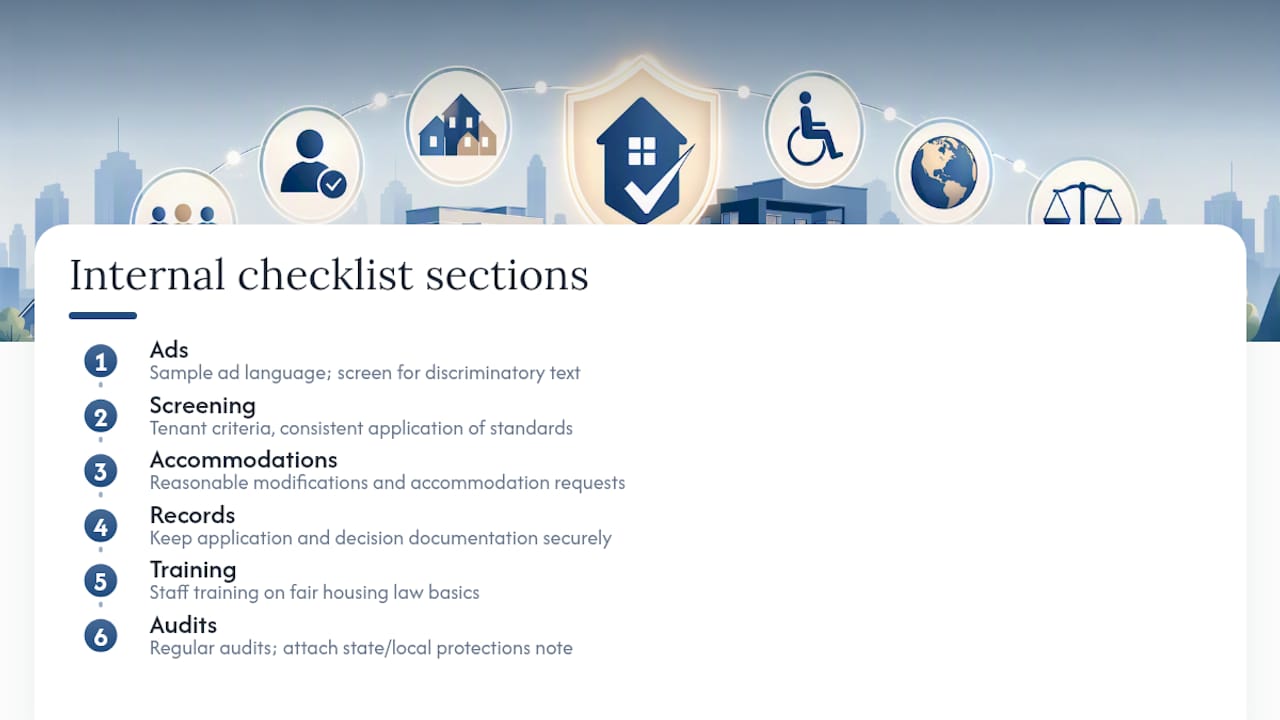
A one-page internal version should have six sections: ads, screening, accommodations, records, training, and audits. Attach a short note on your specific state and local expansions (source of income, age, or marital status protections vary widely) to any template before you adopt it, because a generic federal-only checklist will miss local rules that carry real liability.
What Are the Federal Protected Classes, and Where Do States Go Further?
The Fair Housing Act protects seven classes: race, color, national origin, religion, sex (including gender identity and sexual orientation), familial status, and disability. That’s the federal floor, not the ceiling.
Plenty of states and cities add their own protected categories on top of the federal seven. Source of income protection, which bars refusing housing vouchers or other subsidies, is one of the most common additions and one property managers most often miss. Others include age, marital status, military or veteran status, and sexual orientation as an explicit standalone category rather than folded into sex discrimination.
The practical risk here is treating the federal list as complete. A screening policy that’s perfectly legal under federal law can still violate a state statute if it discriminates based on income source or an added category your jurisdiction protects. Before finalizing any policy, check your state housing agency’s website and your city or county’s fair housing ordinance, and note both in your written policy so staff aren’t relying on memory.
How Do You Build a Training Schedule That Actually Sticks?
A training calendar works only if it’s tied to specific events, not vague good intentions. Anchor it to three triggers: new hire start dates, an annual calendar date for refreshers, and any policy change (new state law, new screening vendor, new listing platform).
Document who attended, what was covered, and when, using a simple log rather than relying on memory or scattered emails. Industry checklists consistently recommend pairing onboarding training with an annual refresher, and that combination catches most gaps before they turn into complaints.
Vendors need the same treatment as employees. A screening company or maintenance contractor who doesn’t understand your fair housing obligations can create liability for you even though they’re not on your payroll. Brief every new vendor before they touch an applicant file or enter a unit, and put that briefing in writing so there’s a record if a vendor’s actions are ever questioned.
Keep training records as long as you keep applicant records. If a complaint surfaces two years after a lease decision, you’ll want proof the staff member involved was actually trained on the policy they’re accused of violating.
Author perspective: why operations beat intention in fair housing compliance
Most violations aren’t malicious. They come from inconsistency: one manager who screens differently than another, a listing that skipped review, a denial with no paper trail. Documented, repeatable processes close that gap far better than staff good intentions ever will. Prioritize written screening criteria, a mandatory ad-review step, and quarterly audits, then build tools and training around making that habit automatic.
— Tyler
Agentwrite: A Practical Tool to Reduce Listing-Copy Risk
Some AI writing tools can generate listing copy, MLS remarks, and social posts from entered property details and flag phrasing that could read as steering or demographic preference before they reach a portal.
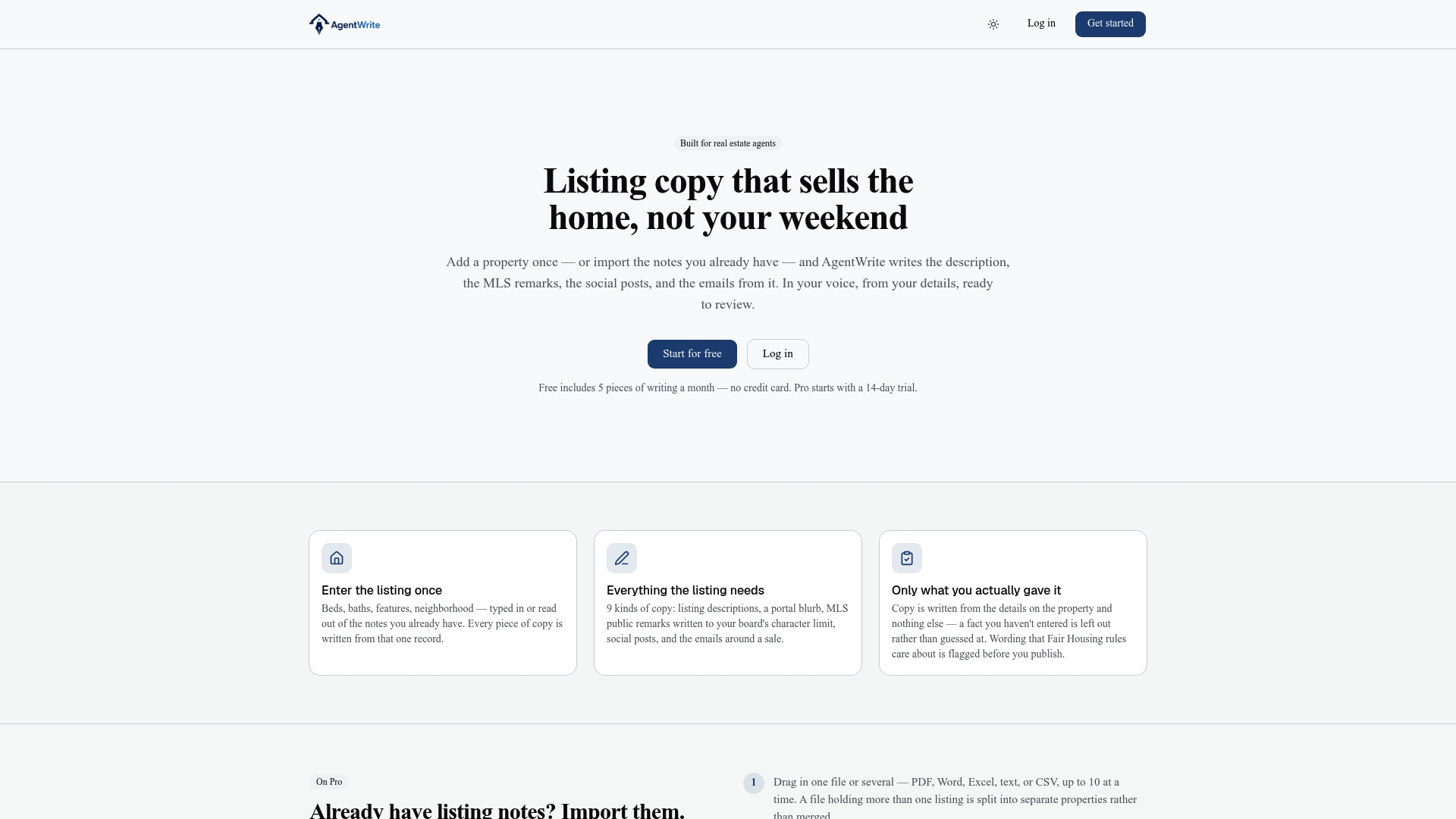
Most teams drop it into their existing review step: generate the draft, let the flagging catch obvious problems, then have a human do the final read before publishing. That combination catches more than either step alone, and it saves the time normally spent rewriting the same property facts across five different formats. Agentwrite doesn’t replace legal counsel or your screening and accommodation procedures. It handles one specific, high-frequency risk: the words that go into your listings. Try the free tier at Agentwrite or view a demo to see how it fits into your current review workflow.
This article is general information, not a substitute for advice from a qualified lawyer. Consult a qualified legal professional about your own circumstances before acting on anything here.
Sources
FAQ
What Are the Most Common Fair Housing Violations?
Discriminatory advertising language, blanket criminal-history denials, and failing to grant reasonable accommodations for disability are the most frequent violations property managers face. Most stem from inconsistent policy application rather than intentional discrimination.
How Do You Prepare a Fair Housing Compliance Checklist?
Start with the six core categories: advertising review, screening criteria, accommodation procedures, record-keeping, staff training, and quarterly audits, then attach your state and local law expansions to each section. Tools like Agentwrite can support the advertising-review step by flagging risky phrasing before publication.
What Must Be Proved in a Fair Housing Complaint?
A complainant generally must show they belong to a protected class, applied or were qualified for housing, were denied or treated differently, and that housing remained available or was offered to others outside their protected class. Disparate-impact claims instead focus on whether a policy disproportionately affects a protected group, regardless of intent.
What Are the Seven Personal Characteristics Protected by the Fair Housing Act?
The federal Fair Housing Act protects race, color, national origin, religion, sex (including gender identity and sexual orientation), familial status, and disability. Many states and cities add further protections, such as source of income or age, on top of these seven.