

Open House Captions That Actually Get People to Show Up
Open House Captions That Actually Get People to Show Up

The best open house captions do three things in the first line: give a specific, sensory reason to care, name a clear next step, and stay short enough to survive Instagram’s mobile clip. Skip the generic “Come see this beautiful home” opener entirely. Lead with a detail a scroller can picture, ask for one action (comment “TOUR,” DM “TIME,” tap the bio link), and match your formatting to whatever platform you’re posting on. The templates below are built to copy, personalize, and publish in under five minutes.
TL;DR:
- Use short, sensory-specific hooks with a clear next step to capture attention and prompt engagement across platforms.
- Post hype, day-of, and last-call captions at strategic times to maximize attendance and create urgency.
- Ensure captions describe the property without referencing demographics or personal attributes to stay compliant with Fair Housing rules.
- Tailor captions to property type, emphasizing atmosphere for luxury homes or space for family houses, to evoke the right emotional response.
- Batch-create captions and leverage tools like Agentwrite to save time, reduce burnout, and automatically flag potential Fair Housing issues.
Table of Contents
- Open House Caption Ideas You Can Copy and Personalize
- How to Write Open House Captions That Actually Convert
- When to Post: A Timing Cadence That Doesn’t Spam Your Followers
- Fair Housing Compliance for Open House Captions
- Caption Templates by Property Type
- Building a Caption Habit That Actually Sticks
- AgentWrite: Faster, Compliant Captions Without the Guesswork
- Sources
- FAQ
Open House Caption Ideas You Can Copy and Personalize
Every caption bank works better when it’s organized by when you’re posting, not just by property type. Agents who batch captions this way avoid the “listing billboard” trap that Krista Mashore has flagged as a real reason followers mute or unfollow real estate accounts: post nothing but listings, and people stop engaging.
Pre-event hype (post 48 to 72 hours before):
- “This backyard has main-character energy. Open house Saturday, 12 to 2 [neighborhood]. Save this post so you don’t forget.”
- “[Feature, e.g., ‘That kitchen island’] is the whole reason we’re doing an open house this weekend. Details in bio.”
- “Three days until you can walk through [neighborhood]'s best-kept secret. Comment ‘TOUR’ and I’ll send the address.”
Day-of invite (post the morning of):
- “Doors open at [time] today at [address]. Bring your questions, leave with a feel for the neighborhood.”
- “Today only: [time] to [time], [address]. The light in this living room hits differently in person.”
- “We’re live at [address] starting [time]. [One feature highlight] alone is worth the drive.”
Last-call (post in the final hour):
- “One hour left. [Address]. Closes at [time]. Come see it before it’s gone from the market, not just from today.”
- “Last call for [neighborhood]'s open house. We close the doors at [time] sharp.”
- “60 minutes. [Address]. If you’ve been on the fence, this is your sign.”
Swap the bracketed placeholders for your actual address, feature, and timing, and rotate the tone so you’re not sending the same energy every week. A luxury listing can lean into the “main-character energy” phrasing; a starter home does better with warmer, more practical language like “room to grow” or “move-in ready.” The Propphy caption playbook groups templates this same way, by post type and tone, so agents can grab what fits without rewriting from scratch every time.
How to Write Open House Captions That Actually Convert
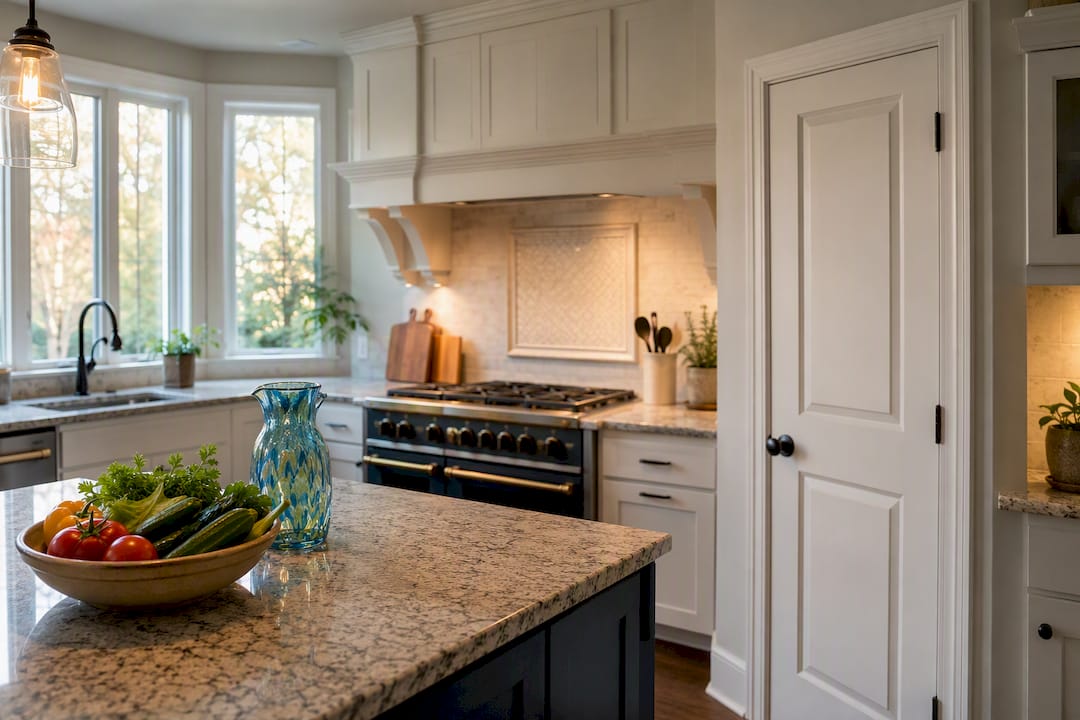
Every caption you write should follow the same skeleton: hook, value, call to action. The hook earns attention in the first five to seven words. Value gives the scroller a reason to keep reading, usually a sensory detail or a benefit no other listing in the area has. The CTA tells them exactly what to do next. This structure comes straight from how Krista Mashore coaches agents to write captions that actually get comments instead of silent scrolls past.
Readability matters as much as structure. Aim for three short lines, three key details, and roughly three seconds of read time before someone decides whether to keep going. Line breaks aren’t decoration. They’re what make a caption skimmable on a phone screen instead of a wall of text.
- Write the hook first, alone. Get the first line right before you touch the rest.
- Add one sensory or specific detail. “Wraparound porch built for slow mornings” beats “great outdoor space” every time.
- Close with a single, low-friction CTA. Comment a word, DM a word, or tap the bio link. Don’t stack three asks.
- Match length to platform. Instagram and TikTok want a punchy hook up top since Instagram often clips captions before the “more” button, and hashtags belong at the very end, not woven into sentences. Facebook can carry more detail, since audiences there tend to read full event logistics before deciding to attend. LinkedIn wants a more professional register, focused on the property as an asset or opportunity rather than a lifestyle sell.
Pro Tip: Skip “What do you think?” as your engagement line. Specific, fill-in-the-blank prompts like “This or that: modern kitchen or classic charm?” reliably pull more comments than open-ended questions, according to Krista Mashore’s caption research.
Here’s the formula applied: “Sunlight pours into this kitchen by 9 a.m. [hook]. Double ovens, quartz counters, and a pantry big enough to hide the mess [value]. Comment ‘TOUR’ and I’ll send you the address before Saturday [CTA].”
When to Post: A Timing Cadence That Doesn’t Spam Your Followers
Posting once and hoping people remember doesn’t work. The stronger approach pairs two distinct posts: a hype post that builds anticipation and a last-call post that creates urgency, a strategy Amplifiles’ research on real estate hooks ties directly to higher same-day attendance.
- 48 to 72 hours before: post a hype caption, ideally with a short video walkthrough or reel.
- Morning of: post the day-of invite with time, address, and one standout feature.
- Final hour: post the last-call caption, paired with a static photo of the exterior or a “come as you are” line.
- One-week checklist: hype post Tuesday, reminder story Thursday, day-of post Saturday morning, last-call post Saturday at 1 p.m.
Video works best for the early hype post since it builds curiosity over several days. Static images pair better with last-call captions because they load instantly and get the point across before someone scrolls past.
Fair Housing Compliance for Open House Captions
Captions feel casual, but they’re still subject to Fair Housing rules, and a throwaway line about the neighborhood “being perfect for young families” can create real liability.
- Do: describe the property, the finishes, the neighborhood amenities, and the open house schedule.
- Don’t: reference who the home is “ideal for,” mention schools by name in a way that implies family status, or use language tied to race, religion, national origin, or disability.
- Do: run captions through a compliance flagger before posting. Tools like AgentWrite catch risky phrasing automatically instead of relying on memory alone.
Caption Templates by Property Type
Different property types call for different emotional levers. Luxury listings sell atmosphere. Starter homes sell possibility. Family homes sell space. Condos sell convenience. Investment properties sell numbers.
- Luxury: “Step into [neighborhood]'s quietest kind of loud. Private tour Saturday, [time]. DM ‘PRIVATE’ to book yours.” / “This isn’t a house. It’s a decision to stop compromising.”
- Starter: “Your first home doesn’t have to be your forever home, but this one might be. Open house [day], [time].” / “Room to grow, priced to make sense. [Address], [time].”
- Family: “Backyard big enough for the trampoline talk. Cul-de-sac quiet enough for actual sleep. Open house Saturday.” / “Four bedrooms. One really good school district. Come see for yourself, [time].”
- Condo: “Lock the door and leave. That’s the whole pitch. Open house [time], [address].” / “Low-maintenance living, high-impact views. Tour it this weekend.”
- Investor: “Cap rate worth a phone call. DM ‘NUMBERS’ before the open house Saturday.” / “Cash-flowing since [year]. See it in person before it’s under contract.”
Swap “Open house Saturday, [time]” for “Open house TODAY, doors close at [time]” and you’ve turned any luxury template into a last-call post without rewriting a word of the value section. Staging cues matter here too. If the listing needs a boost before photos go out, advice on making a house look more expensive can shape which features actually deserve the spotlight in your caption.
Building a Caption Habit That Actually Sticks
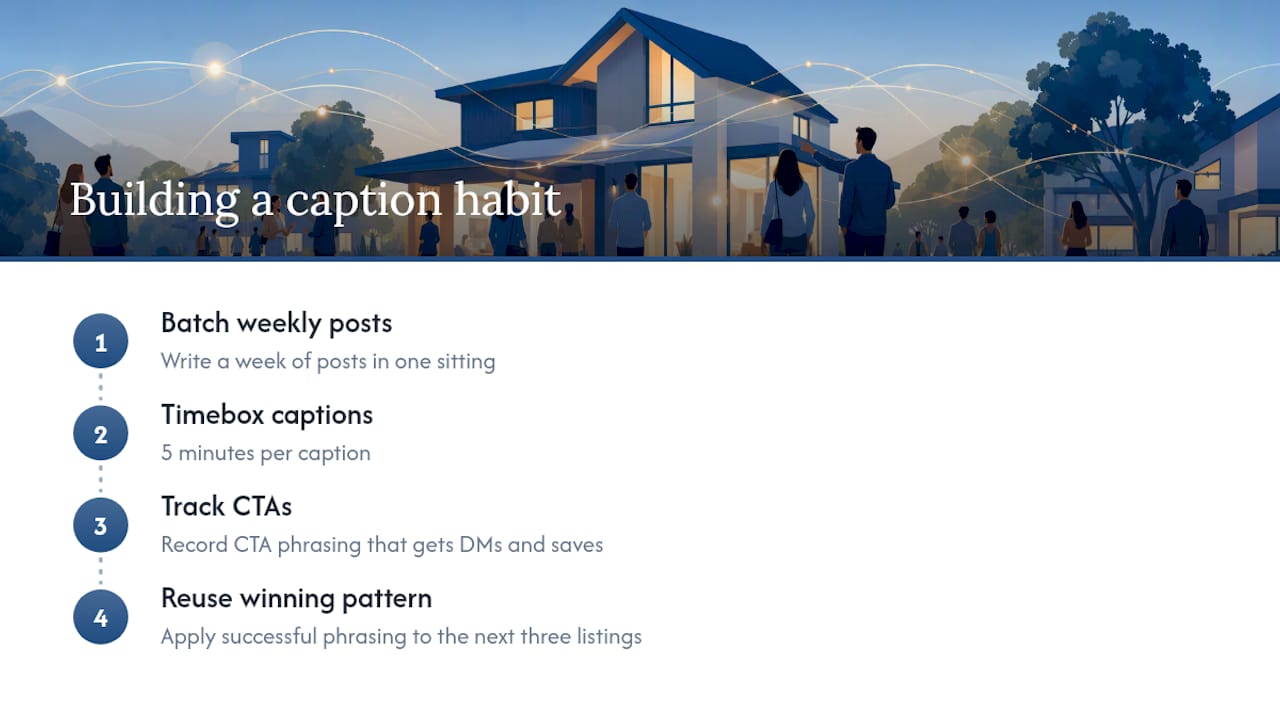
Most agents don’t fail at writing one good caption. They fail at writing fifty good captions without burning out. Batch a week of posts in one sitting, five minutes per caption, and you’ll write faster and better than scrambling the morning of an open house.
Track which CTA phrasing actually pulls DMs and saves, then reuse it. A pattern that works for one listing usually works for the next three.
— Tyler
AgentWrite: Faster, Compliant Captions Without the Guesswork
Agentwrite turns the property details you’d type into a caption anyway into a full set of ready-to-post copy: hype posts, day-of invites, last-call urgency lines, all written in your own voice instead of a generic template. You enter the details once, and it generates listing descriptions, MLS remarks, and social captions from that single input, so you’re not rewriting the same address and square footage five different ways for five different posts.
Two things matter most here. First, it saves the time you’d otherwise spend rewriting captions from scratch every weekend. Second, it flags Fair Housing risks automatically, the same kind of accidental language that can turn an innocent caption into a real liability. Try Agentwrite on your next open house and see how fast a full caption set comes together.
Sources
- Real Estate Social Media Captions That Work | Krista Mashore
- Real Estate Captions: 75+ Hooks That Sell Listings (2026) | Amplifiles
- Real estate captions playbook | Propphy
- Instagram caption length guidance | Later
FAQ
What should I say instead of “open house”?
Try phrasing that implies an experience rather than an event, like “doors open Saturday” or “come walk through it yourself.” It reads less like a listing notice and more like an invitation.
How do you announce an open house on social media?
Pair a hype post 48 to 72 hours ahead with a day-of post that includes the time, address, and one standout feature, then close with a last-call post in the final hour to create urgency.
What are some catchy open house captions?
Short, sensory hooks work best: “Sunlight pours into this kitchen by 9 a.m.” or “60 minutes left, [address].” Add one clear CTA, like commenting a single word for details.
What are some unique home captions?
Skip generic MLS language and describe a moment instead of a feature list, like “backyard built for slow mornings” instead of “spacious outdoor area.” A tool like Agentwrite can generate several unique variations from the same property details if you’re short on time.