Winter Listing Descriptions That Get Showings: MLS-Ready Templates
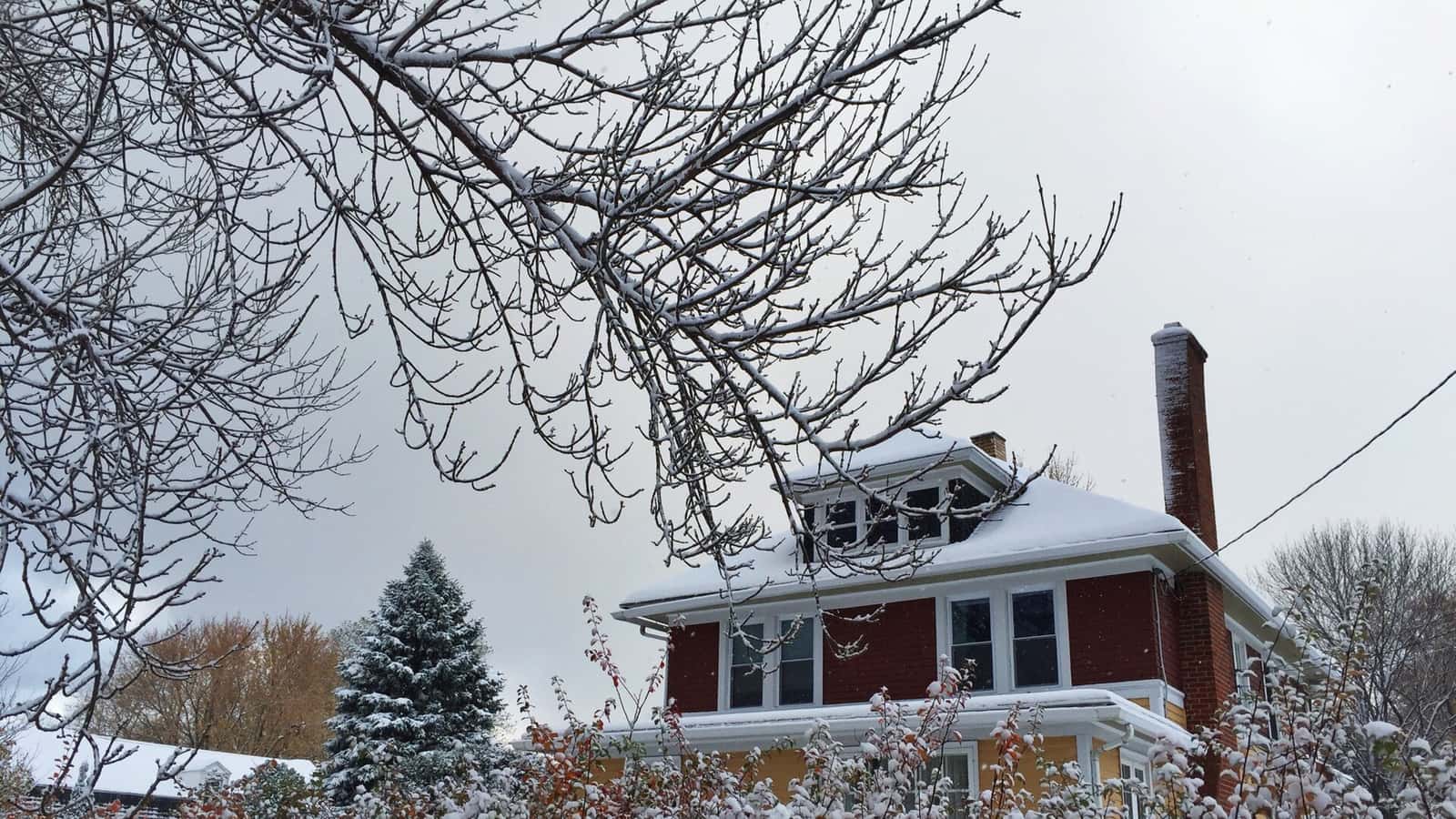
Photo: Snow-covered house, Fredonia, New York by Michael Scialdone, CC BY 2.0.

Mid-November listings rarely stall because buyers disappear. They stall when the copy still reads like May: lush landscaping, a sun-drenched patio, and a home that is "perfect for holiday gatherings."
NAR's seasonal research shows that U.S. existing-home sales slow from the spring peak into fall and winter, and that homes take longer to sell. Canadian boards have documented the same winter lull. Your job is to write for the buyer who is still in the market: often on a deadline, touring after work, and walking through a house as the light fades.
This guide gives you a winter-first hook, claims you can defend, Fair Housing-safe holiday wording, and paste-ready templates for MLS remarks, portal copy, condos, and just-listed posts.
Why winter listings need different copy
Winter is a slower season, not a closed one. In a 2024 NAR analysis of typical daily sales, existing-home activity averaged about 16,530 sales a day from April through June, 13,810 a day in October and November, and 11,380 a day from December through February. Median days on the market stretched from 33 days in the spring peak to 41 days in October and November and 49 days in winter. The slowdown is sharper in some regions than others: in the Midwest, roughly twice as many homes sell on an average June day as on an average January day. Warmer markets and the West see a milder swing.
That pattern has a practical meaning for copy. There are usually fewer competing listings, but the buyers who remain are often serious, and they have more time and more leverage. A vague "must-see charmer" will not move them. A tight description that tells them how the house actually lives in November might.
The same seasonality shows up in Canada. A Toronto Regional Real Estate Board primer on seasonal adjustment notes that spring months are almost always the strongest, after slower winter months, and that this pattern repeats year after year. In its January 2026 release, CREA's senior economist, Shaun Cathcart, said a sales drop in the Greater Golden Horseshoe and Southwestern Ontario was "probably more about a historic winter storm than a downshift in demand," with weather appearing to suppress both demand and supply. If a storm can keep people home, your showing instructions, parking notes, and lighting details matter more than a spring adjective.
Write for the season the buyer will actually tour, not the season in last July's photos.
What to lead with when days are short
Use the same four-part shape you would use in any season, as laid out in our guide to writing listing descriptions: a short hook, four to six fact bullets, a brief neighborhood note, and one clear call to action. Change what goes in the hook.
On a mid-November evening, a buyer notices heat, light, and how they get from the car to the door. Lead with the facts that answer those questions, and put them in the first 12 to 15 words, before a portal or MLS remarks field truncates the rest.
Strong winter openers are specific and checkable:
- "2014 two-story, 4 bed, 2.5 bath, 2023 high-efficiency furnace, attached two-car garage."
- "South-facing 2 bed condo, titled underground parking, heat and water included."
- "Covered front entry, 2022 roof, main-floor bath, showings available after 5 p.m."
Build the bullets from a fact sheet, not from a mood. Good winter property feature bullets include:
- Heating type, year, and any documented rating (furnace, boiler, heat pump, radiant floors)
- Window or door updates, with the year
- Exposure you can verify (south- or west-facing living room)
- Covered entry, mudroom, or inside access from the garage
- Parking that matters in snow: attached garage, heated garage, underground stall, block-heater outlet
- Utilities that are included, if they really are
- A measured outdoor fact that still holds in winter, such as a covered porch or a fully fenced yard
Leave "cozy," "charming," and "warm and inviting" off the first line. If the living room gets afternoon light, say it faces south and has a large west window. If the seller just serviced the furnace, give the service date, not "worry-free winter." Keep the neighborhood note factual too: a named transit stop, grocery store, or commute time you can defend. Skip "quiet, safe street" and "perfect holiday neighborhood."
Claims you can defend, and ones you should cut
Winter copy creates two traps: leftover summer language, and energy claims you cannot prove.
Cut any line that is no longer true on the ground. "Lush gardens" does not help a buyer standing in eight inches of snow. If the landscaping is a spring feature, say the lot is fully fenced, or that garden photos were taken in July, if your board allows a dated seasonal photo and you disclose it. "Sun-drenched patio" is a problem if the patio faces north and dinner is at 5 p.m. in December. "Low heating bills" is a problem if you do not have bills or a documented system rating in the file.
Be just as careful with numbers. The Federal Trade Commission's home insulation advertising rules require a reasonable basis for claims that insulation will cut fuel bills or fuel use. The same discipline belongs in a listing: if you do not have a documented basis, do not invent a percentage. Name the equipment instead.
| Risky line | Safer line |
|---|---|
| "Low heating bills all winter" | "2023 high-efficiency gas furnace, last serviced in October 2026" |
| "Energy-efficient home" | "ENERGY STAR windows installed in 2021, documented on the seller's invoices" |
| "Cut your power bill in half" | Omit the savings claim. State the system, year, and rating only. |
| "Always bright and sunny" | "South-facing living room with an 8-foot west window" |
| "Lush, landscaped yard" | "Fully fenced 40-by-120-foot lot; garden photos dated July 2026" |
| "No snow to worry about" | "Titled underground parking and an interior lobby entrance" |
If the seller has utility bills or an energy audit, keep them for serious inquiries. Do not paste a round number into public remarks.
Canadian and U.S. listings also diverge on ordinary terms. Follow the spelling and units your board uses, and stay consistent inside one listing. In many Canadian markets, "hydro" means electricity, "townhouse" is more common than "townhome," and a block-heater outlet or HRV is a real selling point. Write "2,240 sq ft" or "208 sq m" the way the listing data is entered, not both, unless your board requires it.
Fair Housing and holiday wording
Holiday season is when otherwise careful agents slip into "perfect for your family at Christmas." That line is a problem even when it is well meant.
In the United States, HUD's advertising rule makes it unlawful to publish a housing ad that indicates a preference, limitation, or discrimination because of a protected class, including familial status or religion. "Sleeps the whole family for the holidays," "close to churches for Christmas Eve," or "perfect for a young family" points at who should live there.
Canadian agents should use the same discipline. The Ontario Human Rights Commission's fact sheet on fair housing ads is written for rental advertising, but the instruction belongs in sales copy too: describe the unit, not the tenant. "Ideal for a quiet couple" and "not suitable for children" are examples the Commission flags. "Great for family holiday gatherings" is the same mistake in seasonal clothing. Our Fair Housing advertising guide has more rewrites.
Safe winter wording talks about the room:
- "Dining room currently seats eight."
- "Wood-burning fireplace in the living room; buyer to verify condition and any local restrictions."
- "Covered front porch, 6 by 16 feet."
- "Primary suite is on the main floor."
This is guidance, not legal advice. When a line feels close, run it past your broker and check your provincial or state advertising rules before it goes live.
Copy-ready winter templates
Swap the bracketed facts for what is on your sheet. Keep every number, year, and included utility accurate. These are examples, not promises about days on market or sale price.
1. MLS public remarks, snow-market single-family
2009 two-story, 4 bed, 2.5 bath, 2,240 sq ft. High-efficiency gas furnace replaced in 2023, roof in 2022. South-facing living room, covered front entry, inside access from an attached two-car garage. Main-floor powder room and laundry. Fully fenced backyard. 0.4 miles to the [Name] transit stop. Weekday twilight showings available.
2. Expanded portal description
This 2009 two-story has the winter facts buyers ask about on the first walk-through. The gas furnace was replaced in 2023, the roof in 2022, and the seller had the heating system serviced in October 2026. A south-facing living room and a west window keep the main floor in afternoon light, even when dinner is early. You come in through a covered front entry, or from the attached two-car garage, and there is a powder room and laundry on the main floor. Upstairs are four bedrooms and two full bathrooms. The backyard is fully fenced; garden photos were taken in July 2026. The house sits 0.4 miles from the [Name] transit stop. Book a weekday showing after 5 p.m. and walk it in the light you would actually live with.
3. Condo or low-maintenance winter listing
2 bed, 2 bath, 1,050 sq ft. Titled underground parking, storage locker, in-suite laundry. Interior lobby entrance. Heat and water are included; electricity is extra. The living room faces south. Building amenities: fitness room and a parcel room. 0.3 miles from [named grocery] and the [Name] transit stop. Private showings available after 5 p.m.
4. Just-listed caption or email opener
Just listed in [neighborhood]: a 4-bed, 2.5-bath home with a 2023 furnace, an attached two-car garage, and a covered front entry. Twilight showings start this week. Comment or reply "TOUR" and I will send the details.
A fifth, honest rewrite is worth keeping on your desk when a seller wants "cozy holiday home" in the remarks:
Before: "Cozy, charming home, perfect for your family this holiday season! Low heating bills and a safe, quiet street."
After: "3 bed, 2 bath, 1,620 sq ft. Furnace replaced in 2024. Dining room currently seats eight. Covered front porch, attached one-car garage, fully fenced yard. 0.5 miles from [named park] and [named grocery]. Contact [name] to book a showing."
The second version still sells warmth. It just sells it with rooms, systems, and distances.
Pair the copy with honest winter photos
Copy and photos have to tell the same season. If the remarks mention a snow-covered roof line and a cleared walk, the first photo should not be a mid-July bloom, unless your board allows older photos and you label them clearly. Our MLS photo rules checklist covers board-level accuracy, people in frames, and what belongs in the first still.
A current exterior shows the roofline, the covered entry, and how the house sits on the lot. An interior shot taken after 4 p.m. with the lights on is more useful than a claim about "all-day sun." If snow is burying the gardens, say so in the remarks and lead the gallery with the architecture and the rooms a buyer will care about on a short day. Do not promise a "manicured walk" you have not shoveled, and do not leave a face or a holiday scene that implies who lives there in the hero image.
Draft the MLS, portal, and social versions in one pass
The work is the fact sheet. Once the heating system, exposure, parking, utilities, and entry are verified, you should not be rewriting those details three times by hand. AgentWrite turns that sheet into an MLS-length description, a longer portal version, and a just-listed caption in your voice, and it flags wording that may raise Fair Housing concerns before you publish.
A practical winter pass looks like this: enter the verified facts, generate two or three drafts, then edit claim by claim against the sheet. Cut leftover summer adjectives. Check the furnace year, the parking type, and the included utilities one more time. If a holiday phrase snuck in, replace it with a room measurement. Publish the version that would still be true at 5 p.m. on a weekday in January. The same pass works as a refresh if a live listing still reads like May.
Sources
- Navigating the Housing Market: A Seasonal Perspective (NAR, April 29, 2024)
- A TREB Primer on Seasonality and Seasonal Adjustment
- Canadian Home Sales Begin 2026 on Ice (CREA, February 18, 2026)
- 24 CFR 100.75, Discriminatory advertisements, statements and notices (HUD)
- Writing a fair rental housing ad (Ontario Human Rights Commission)
- 16 CFR Part 460, Labeling and Advertising of Home Insulation (FTC)
FAQ
Do homes actually sell in November and December?
Yes. Sales volume is lower than in spring, but the market does not shut down. NAR seasonal research puts average existing-home sales at about 13,810 per day in October and November and 11,380 per day from December through February, compared with about 16,530 per day in the April-to-June peak. Days on market are longer, and the buyers who remain are often on a real timeline.
What should I lead with in a winter listing description?
Lead with facts a winter buyer can feel on a late-afternoon showing: an updated heating system with the year and type, a south or west exposure you can verify, an attached or heated garage, a covered entry, and included utilities when they apply. Put those in the first 12 to 15 words.
Can I mention the holidays or say a home is perfect for family gatherings?
Describe the room, not the guest list. HUD advertising rules prohibit copy that indicates a preference based on familial status or other protected classes, and the Ontario Human Rights Commission gives the same direction for housing ads: describe the unit, not the ideal occupant. A dining room that seats eight is a fact. "Perfect for family holidays" is a preference.
Can I say the home will cut heating bills?
Only if you can document the claim. Name the equipment, the year it was installed, and any rating on file, such as AFUE or ENERGY STAR. Do not invent a percentage of savings. In the United States, the FTC requires a reasonable basis for insulation and fuel-savings claims.
Can AgentWrite draft winter listings for MLS and social at the same time?
Yes. Enter the verified winter facts once, including the heating system, exposure, parking, utilities, and entry, and AgentWrite can produce an MLS-length version, a longer portal description, and a just-listed caption, while flagging wording that may raise Fair Housing concerns.