

Listing Description Examples That Get Buyers to Click
Listing Description Examples That Get Buyers to Click

Here are three headlines you can use today: “Sunlit Craftsman Steps From Downtown’s Best Coffee,” “Move-In Ready Ranch With a Kitchen That Steals the Show,” and “Top-Floor Corner Unit, Zero Neighbors Above You.” Pair those with short blurbs like this one: “Renovated 2024 kitchen, private patio, two blocks from the farmers market. Parking included. Schedule your tour before this one’s gone.” For MLS or website copy that needs more room, expand into 80 to 200 words that open with your single best fact, paint two or three lifestyle moments, then close with specifics.
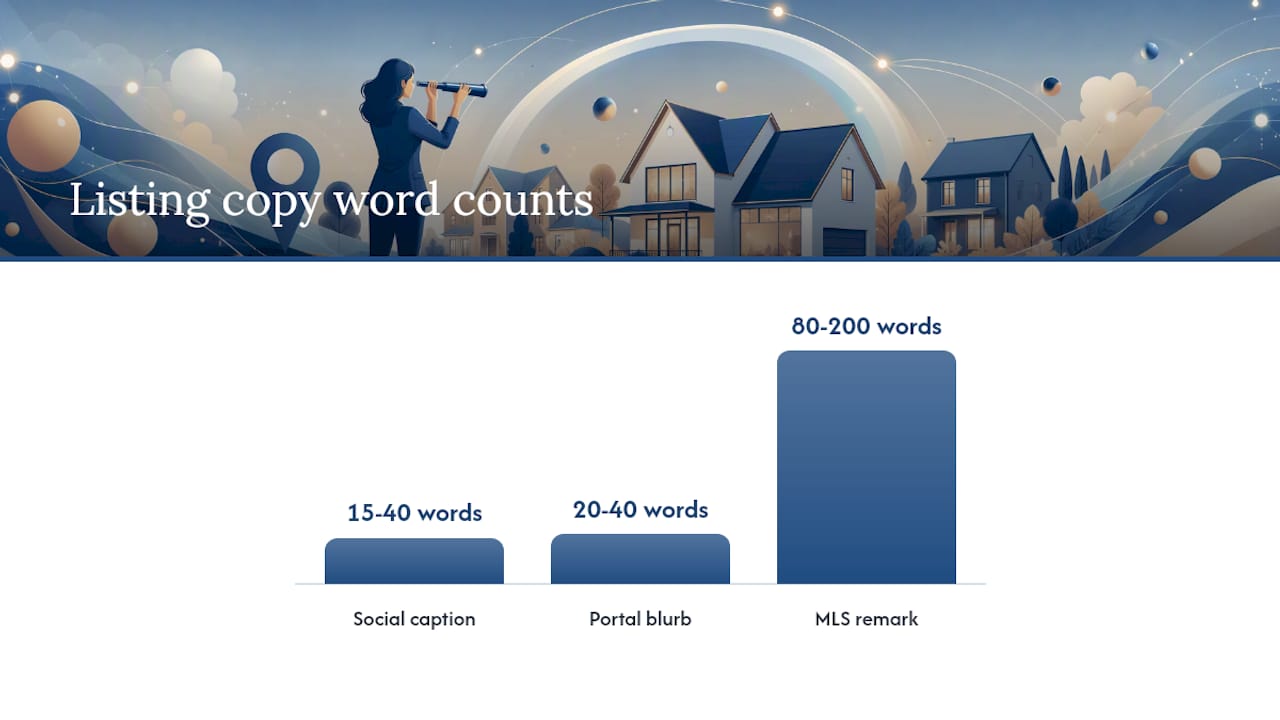
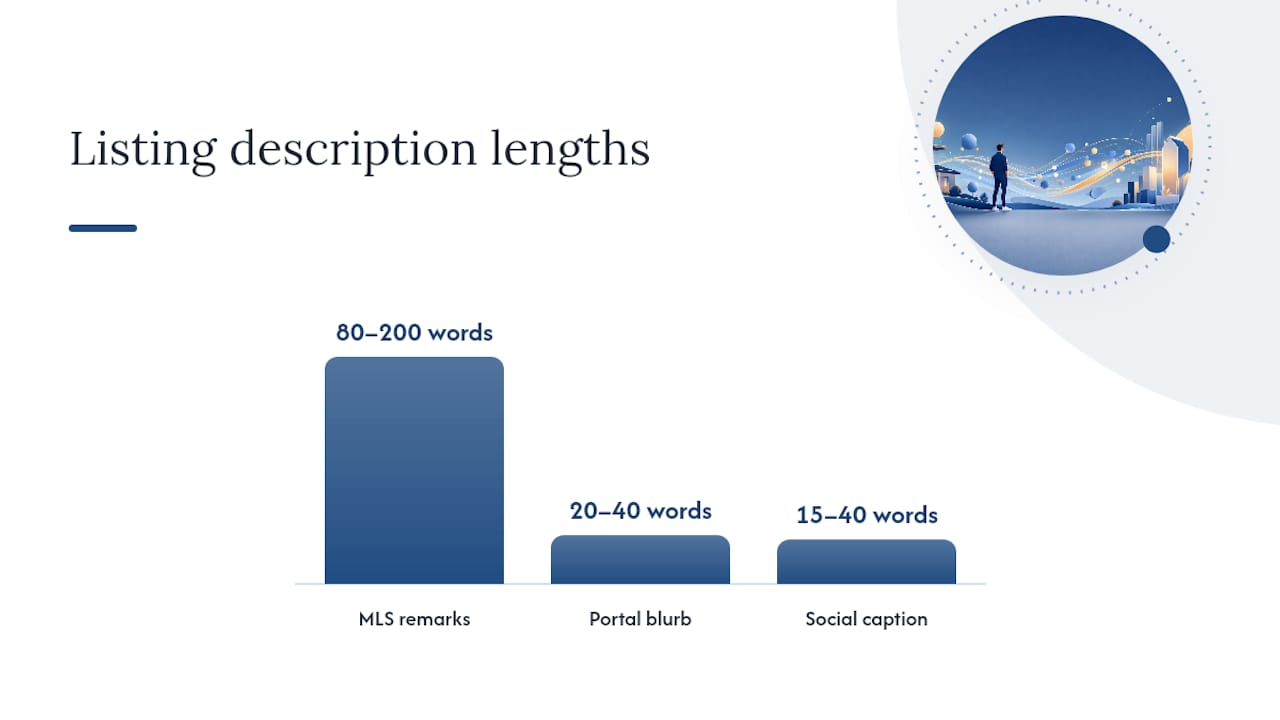
The rule that governs all of it: match your length to the platform. Zillow’s guidance on listing copy confirms that shorter, scannable descriptions outperform dense paragraphs because buyer attention on mobile is short and MLS/portal character counts are tight. A social caption runs 15 to 40 words. A portal blurb runs 20 to 40. An MLS remark or site paragraph runs 80 to 200. Anything longer gets skimmed, not read.
Pro Tip: Write your headline last. Once you’ve drafted the full description, the strongest line in it is almost always buried in the middle. Pull it up top.
Key Takeaways
The best listing descriptions lead with one verifiable differentiator, sell a lifestyle around it, and back every claim with a specific, checkable fact.
| Point | Details |
|---|---|
| Lead with your best fact | Open with the single detail buyers would brag about, not a string of adjectives. |
| Match length to platform | Keep social and portal copy under 40 words; save 80 to 200 words for MLS remarks. |
| Verify before publishing | Confirm square footage, update years, and HOA fees against real records every time. |
| Watch for Fair Housing language | Cut any phrase that signals an ideal buyer type instead of describing the property. |
| Use Agentwrite to speed drafts | Generate voice-matched MLS remarks and portal blurbs from one input, then edit for accuracy. |
Table of Contents
- Why Listing Description Examples Drive More Showings
- Listing Description Examples By Property Type
- How to Write a Listing Description Step By Step
- Templates You Can Fill In and Reuse
- Testing and Refining Your Listing Copy
- Listing Description Do’s and Don’ts
- Using AI Tools Without Losing Accuracy
- How Agentwrite Fits Into Your Listing Workflow
- Frequently Asked Questions
- Sources
Why Listing Description Examples Drive More Showings
A listing description’s job isn’t to catalog features. It’s to sell the feeling of living there, then back that feeling up with facts a buyer can verify. Realtor puts it plainly: lead with your strongest differentiator, and support every claim with something checkable, not vague adjectives like “stunning” or “must-see.”
Think of the buyer journey as four short steps: photo grabs attention, headline earns the click, blurb earns the read, and the closing paragraph earns the showing request. Weak copy anywhere in that chain loses the buyer before they ever pick up the phone.
Agents track three numbers when a description is working:
- Click-through rate on the listing photo or headline
- Inquiry volume relative to similar listings in the area
- Showing requests scheduled within the first week
Shorter, specific copy consistently beats padded copy on all three, largely because it respects how little time a scrolling buyer actually gives each listing.
Listing Description Examples By Property Type
Different property types sell on different emotional triggers. A luxury buyer wants exclusivity. A first-time buyer wants relief from renting. A fixer-upper buyer wants to see potential, not problems. Below are copy-ready examples for seven common categories, each built around the one detail buyers in that segment actually brag about later.
Luxury
Headline: “Private Hilltop Estate With Unobstructed Sunset Views”
Short blurb: “Five bedrooms, wine cellar, and a resort-style pool on a spacious private lot. Gated entry. Smart-home controls throughout. Private tours by appointment.”
MLS paragraph: This hilltop estate sits on a spacious private lot with panoramic sunset views from nearly every room. The chef’s kitchen features a 48-inch range, dual islands, and a butler’s pantry connecting to a formal dining room built for entertaining. Downstairs, a temperature-controlled wine cellar holds 400 bottles. Outside, a resort-style pool and outdoor kitchen overlook the valley, with a separate guest casita offering privacy for visitors. The primary suite spans the entire west wing and includes a spa bathroom and private balcony. Smart-home technology controls lighting, climate, and security from a single app. Gated entry and a circular motor court complete the estate. Square footage, lot survey, and HOA documents available upon request.
Luxury buyers brag about privacy and craftsmanship, not square footage alone. Pro Tip: Name the one feature a dinner-party guest would ask about, and lead with it. It’s rarely the biggest room in the house.
Starter Home
Headline: “Move-In Ready 3-Bedroom, No Projects Required”
Short blurb: “Freshly painted, new carpet, and a fenced yard for the dog. Walk to the elementary school. Priced competitively for a timely sale.”
MLS paragraph: This three-bedroom, two-bath home is ready for its next chapter, with fresh paint, new carpet, and a roof replaced in 2023. The open kitchen and living area make everyday life easy, and a fully fenced backyard gives kids and pets room to roam. The attached two-car garage adds storage most starter homes skip. Located within walking distance of the elementary school and a short walk to the neighborhood park, this is a rare combination of move-in condition and walkable location at an entry-level price. Schedule a showing before it’s under contract.
First-time buyers brag about not having to fix anything right away. Lead with “move-in ready” and prove it with a specific update, like that 2023 roof.
Fixer-Upper
Headline: “Solid Bones, Serious Upside on a Quiet Street”
Short blurb: “Original hardwood floors, a large lot, and room to add square footage. Priced below market to reflect condition. Cash or renovation loan welcome.”
MLS paragraph: This 1958 brick ranch sits on a rare quarter-acre lot in an established neighborhood where updated homes sell well above this price point. Original hardwood floors run throughout, and the layout offers an easy path to an open-concept kitchen and living area. The roof and HVAC were both replaced within the last five years, meaning your renovation dollars can go straight into cosmetics and layout rather than mechanicals. A detached garage and oversized backyard round out the lot. Investors and owner-occupants alike will appreciate the value already built into this price.
Fixer-upper buyers brag about the deal they got, not the current condition. Name what’s already been fixed so the remaining work reads as manageable, not risky.
Condo
Headline: “Top-Floor Corner Unit With City Skyline Views”
Short blurb: “Two bedrooms, floor-to-ceiling windows, and one deeded parking space. Building amenities include a gym and rooftop deck. HOA covers water and trash.”
MLS paragraph: Perched on the top floor of this well-managed building, this corner unit brings in light from two exposures and frames unobstructed skyline views. The open kitchen features quartz counters and stainless appliances updated in 2022. In-unit laundry, a private balcony, and one deeded parking space add rare convenience for this price point. Residents enjoy a fitness center, rooftop deck, and secure package room. Monthly HOA dues include water, trash, and building maintenance. Pet-friendly with breed restrictions. This is city living without compromise on space or light.
Condo buyers brag about the view and the low-maintenance lifestyle. Always verify the current HOA fee before publishing since these change more often than agents expect.
Rental
Headline: “Bright 2-Bedroom, Pet-Friendly, Steps to Transit”
Short blurb: “Renovated kitchen, in-unit washer/dryer, and a private balcony. Two blocks from the light rail. Available now, credit and income requirements apply.”
MLS paragraph: This bright two-bedroom apartment offers a renovated kitchen, stainless appliances, and an in-unit washer and dryer, rare finds at this rent point. A private balcony overlooks a quiet courtyard, and central air keeps the unit comfortable year-round. Located two blocks from the light rail station and walking distance to a grocery store and coffee shop, the location cuts commute time significantly. Off-street parking is available for an additional fee. Applicants must meet income and credit requirements as outlined in the rental application. Available for immediate move-in.
Rental copy should stay entirely feature-based. Fair Housing rules apply here just as strictly as they do to for-sale listings, so keep language focused on the unit, never the tenant.
New Build
Headline: “Brand-New Construction With a Builder’s Warranty Included”
Short blurb: “Energy-efficient design, open floor plan, and a 10-year structural warranty. Choose your finishes before closing. Estimated completion is planned soon.”
MLS paragraph: This brand-new construction offers the peace of mind that comes with a builder’s 10-year structural warranty and modern energy-efficient systems throughout. The open floor plan connects the kitchen, dining, and living areas around a gas fireplace, while the primary suite includes a walk-in closet and double-vanity bathroom. Buyers who act before framing is complete can still select flooring, cabinet, and countertop finishes. A tankless water heater and spray-foam insulation keep utility costs low. Estimated completion is spring 2026, with a full builder walkthrough scheduled before closing.
New-build buyers brag about customization and warranty coverage, not history. Confirm the exact completion timeline with the builder before you publish it, since these dates shift often.
Historic
Headline: “1920s Craftsman With Original Woodwork, Fully Updated Systems”
Short blurb: “Restored original millwork, a wraparound porch, and modern mechanicals. Electrical and plumbing updated in 2021. A rare blend of character and comfort.”
MLS paragraph: Built in 1924, this Craftsman bungalow has been lovingly maintained while receiving the updates today’s buyers expect. Original oak millwork, built-in cabinetry, and leaded glass windows remain throughout, paired with electrical and plumbing systems fully updated in 2021. The wraparound front porch and covered back patio offer classic outdoor living space rare in newer construction. A detached carriage house provides bonus storage or studio potential. This is a home with a documented history and the mechanical updates to match, located in a neighborhood on the local historic register.
Historic-home buyers brag about authenticity paired with modern reliability. Naming the specific update year for electrical or plumbing does more to reassure them than any adjective could.
Before you publish any of these, double-check square footage against the appraisal or public record, confirm every “updated in [year]” claim with the seller, and verify current HOA or strata fees directly with the association.
How to Write a Listing Description Step By Step
Every strong description follows the same structure, whether it runs 30 words or 200. CloseDaily’s listing formula breaks it into four parts: lead with your best differentiator, build a lifestyle middle, deliver a facts block, and close with a call to action. Here’s how to execute each one.
- Find your lead fact. Ask what a buyer would tell their friends about this house six months after moving in. That’s your opening line, not the fifth sentence.
- Write the headline and opener together. Your headline earns the click; your first sentence earns the next ten seconds. Keep both under 12 words each and specific: “Corner-lot Colonial with a chef’s kitchen” beats “Beautiful home in great location.”
- Build the lifestyle middle. Two to five sentences that turn features into moments: not “large backyard” but “host summer barbecues under the covered patio while the kids play on the new sod.”
- Assemble the facts block. Include beds, baths, square footage, lot size, parking, and any update with its year: “roof replaced 2023,” “HVAC installed 2021.” McKissock’s guide for agents notes that vague claims create buyer surprises and fewer qualified inquiries, while dated, checkable facts do the opposite.
- Close with a clear CTA. “Schedule your private tour today” works for MLS. “DM us to book a showing” works for social. Match the CTA’s tone to the platform.
Length rules by channel: MLS remarks typically run 80 to 200 words depending on your board’s character limit. Portal blurbs run 20 to 40 words. Social captions run 15 to 40 words, often shorter with strong visuals.
Before publishing anything, run it against a short checklist:
- Does the opening line lead with a specific, verifiable fact?
- Is every date, dimension, and fee current and confirmed?
- Does the language describe the property, not the ideal buyer? HUD’s Fair Housing Act overview prohibits copy that signals a preference based on protected characteristics, so phrases like “perfect for families” or “walkable for young professionals” need to go.
- Does it end with a clear, platform-appropriate CTA?
Pro Tip: Read your draft out loud. If a sentence sounds like it belongs in a brochure instead of a conversation, cut it or rewrite it in plain language.
Templates You Can Fill In and Reuse
Templates save time without sacrificing quality, as long as you swap in real, verified details every time. Here are the patterns worth keeping on hand.
Headline formulas:
- “[Adjective] [Property Type] With [Standout Feature]” — “Sunlit Bungalow With a Chef’s Kitchen”
- “[Distance/Location] From [Local Landmark]” — “Two Blocks From the Riverwalk”
- “[Property Type], [Key Update], [Bonus Feature]” — “Ranch, New Roof, Finished Basement”
Short blurb template (20 to 40 words): “[Bed count]-bedroom [property type] with [top feature] and [second feature]. [Location detail]. [Short CTA].” Example: “Three-bedroom Craftsman with a renovated kitchen and covered porch. Steps from downtown. Book your showing this week.”
MLS paragraph template (80 to 200 words), filled in order:
- Lead: state the single best fact
- Lifestyle: two to three sentences painting daily life
- Facts block: beds, baths, square footage, lot size, updates with years, parking, any warranty
- CTA: a direct, platform-appropriate closing line
Swap the bracketed sections for your listing’s actual details and the structure holds up across property types.
Testing and Refining Your Listing Copy
Treat your description like any other piece of marketing copy: something to measure, not something to write once and forget.
- Run two headline variants on the same portal listing for a week and compare click-through rate.
- Rotate two different social captions for the same property and track engagement and inquiries separately.
- Watch the ratio of listing views to showing requests as your primary success metric, not views alone.
- Give each test at least five to seven days before drawing conclusions. Small sample sizes swing wildly day to day.
MLS remarks are harder to A/B test since they’re often static, but portal blurbs and social captions are cheap to rotate. Tailor tone by channel: MLS stays factual, portals can lean lifestyle, and social can get playful, as long as every claim still holds up to verification.
Listing Description Do’s and Don’ts
- Do lead with one standout, verifiable feature, not a string of adjectives.
- Do use lifestyle moments, not just feature lists, to create emotional pull.
- Do include dates on updates (“kitchen renovated 2024”) to build buyer confidence.
- Don’t rely on filler words like “amazing,” “must-see,” or “charming” without backing them up.
- Don’t use language that signals an ideal buyer type. “Great for families” or “perfect for retirees” both violate Fair Housing guidance.
- Don’t state anything you haven’t personally verified, especially square footage, warranties, or HOA fees.
Using AI Tools Without Losing Accuracy
AI tools work best as drafting and editing assistants, not fact sources. Kapre’s resource on AI for real estate agents recommends feeding verified property facts into a tool, generating a structured first draft, then editing for specificity and compliance before anything goes live.
The workflow: gather your facts (beds, baths, updates with years, lot size) first. Generate a draft with a tool built for structure and speed. Edit for tone and remove generic filler. Run a final fact check against your notes, the appraisal, and any HOA documents.
Some items always need human eyes: measurement figures, warranty terms, update years, and any neighborhood claim. Local disclosure rules vary too. Some states, like the Texas Real Estate Commission’s consumer protection notice requirement, mandate specific broker disclosures that a generic AI tool won’t know to flag.
AI should structure and speed up the writing process. It should never be the source of the facts themselves.
Pro Tip: Keep a standing “facts sheet” per listing (updates, dates, dimensions, fees) and paste it into any drafting tool. It cuts editing time in half and keeps invented details out of your copy.
A quick edit that saves time
I once rewrote a listing that opened with “Welcome to this beautiful home in a great neighborhood.” I moved the fourth sentence, “kitchen fully renovated in 2023 with quartz counters,” to the very top. Same facts, same house. The rewrite got noticeably more inquiries within days.
That’s the whole job: find the one line buyers will actually repeat to someone else, and stop burying it.
How Agentwrite Fits Into Your Listing Workflow
Ryan Case Realtor’s site is the shortcut for agents tired of rewriting the same bones of a listing description for every new property. You enter a property’s details once, and it generates MLS remarks, portal blurbs, social posts, and even seller-facing materials in your own voice, all from that single input.
It fits directly into the workflow this article just walked through: import or type in your verified facts, generate a structured draft in seconds, then edit for tone and double-check anything time-sensitive, like update years or HOA fees. Agentwrite also flags language that could raise Fair Housing concerns before you publish, catching the kind of phrasing that slips into copy when you’re rushing between showings. A free tier lets you test the workflow on a limited number of drafts each month, and the Pro plan removes that cap while adding file import and expanded copy types. If today’s headline examples got you thinking about how much faster this could go, try Agentwrite on your next listing.
Frequently Asked Questions
How long should a real estate listing description be? MLS remarks generally run 80 to 200 words, portal blurbs run 20 to 40 words, and social captions run 15 to 40 words. Check your specific MLS board’s character limit before finalizing.
What makes a listing description compelling instead of generic? Compelling copy leads with one specific, verifiable fact rather than adjectives like “stunning” or “amazing,” then builds two or three lifestyle moments around it before closing with a clear call to action.
What words should I avoid for Fair Housing compliance? Avoid any language that signals an ideal buyer type, including phrases like “perfect for families,” “great for retirees,” or “walkable for young professionals.” Describe the property, not the person you imagine living there.
Can I use AI to write my listing descriptions? Yes, when you feed it verified facts and edit the output for accuracy. Tools like Agentwrite work well for structuring drafts quickly in your voice, but every date, measurement, and fee still needs a human check before publishing.
How do I know if my listing description is working? Track click-through rate on the headline or photo, listing views relative to similar properties, and the ratio of views to scheduled showings. A low view-to-showing ratio usually means the copy isn’t closing the gap between interest and action.